
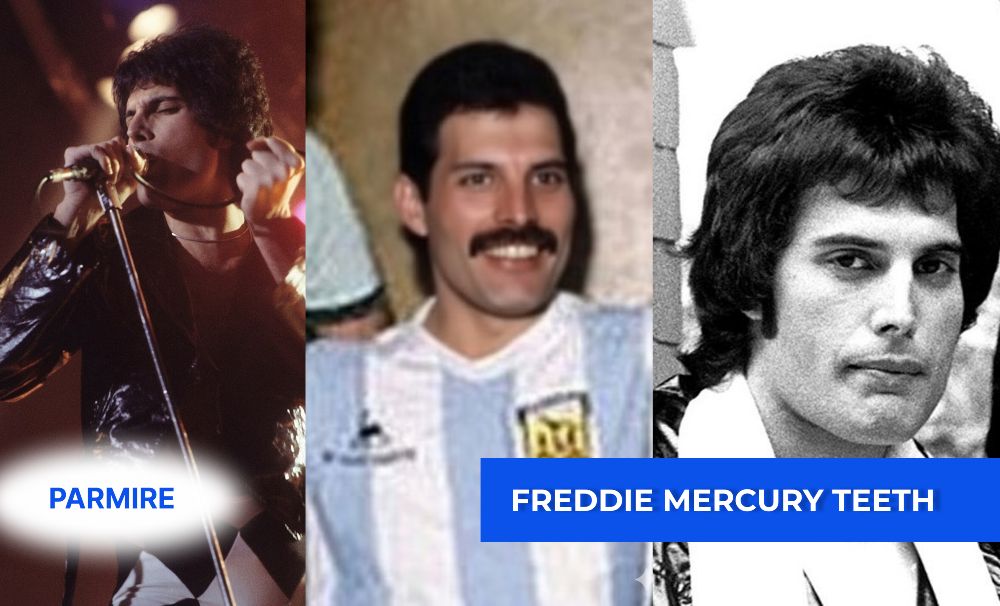
Freddie Mercury teeth are often noted for their large size and strong overbite, features that helped shape his unforgettable smile and became a trademark of his magnetic stage persona.
Many people are curious about the appearance of his teeth and the reasons behind them. They also wonder why he chose not to have them corrected.
You will see that the characteristics of his teeth reveal a narrative of confidence, individuality, and artistic boldness. They also tell a story of his medical history.
Who Was Freddie Mercury?
People think Freddie Mercury was one of the best rock singers of all time. He was born in Zanzibar in 1946 and grew up in India. Later, Freddie Mercury travelled to the UK, where he started Queen with Brian May and Roger Taylor.
Mercury was exceptional for his impressive singing range and captivating theatrical presence. Freddie Mercury‘s teeth defined his appearance. These features contributed significantly to his public persona alongside his musical talents.
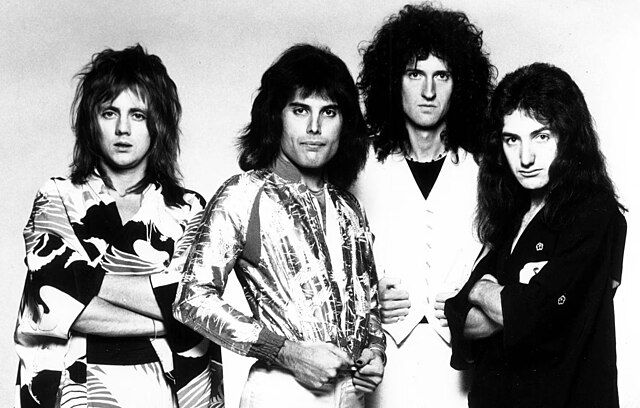
Did Freddie Mercury Really Have Extra Teeth?
There is no publicly available X-ray, but it is widely reported that Freddie Mercury had four additional incisors.. He had more teeth than the average adult, who typically has 32.
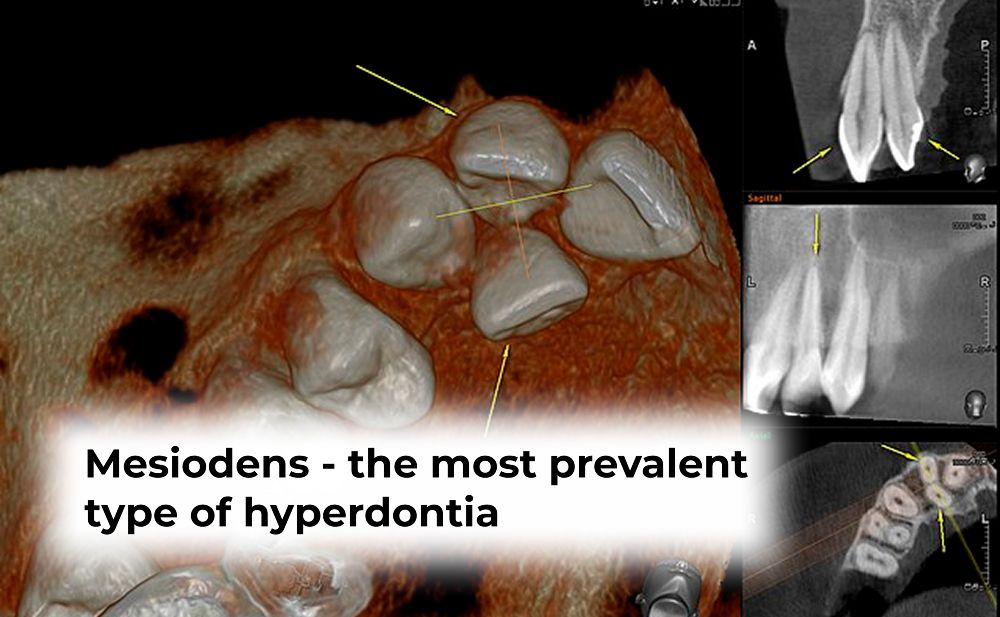
Freddie Mercury had mesiodens – the most prevalent type of hyperdontia, which involves extra teeth growing just behind the upper front ones.
How many extra teeth did Freddie Mercury have?
People have different ideas about how many extra teeth he had. However, four is the figure most commonly mentioned.
Freddie Mercury’s Dental Condition Explained
Did Freddie Mercury have extra teeth?
There is a medical condition called hyperdontia that Freddie Mercury had, which means he had more teeth than most people. These teeth pushed his front teeth forward, making his overbite prominent.
His upper jaw appeared crowded, and the positioning of his front teeth impacted his appearance, speech, and even his singing. Although many consider hyperdontia mainly a cosmetic issue, in Freddie Mercury‘s case, it became a significant aspect of his charm.
Characteristics of supernumerary teeth
Extra teeth, referred to as supernumerary teeth, emerge in addition to the usual number of teeth. The presence of these extra teeth exerted pressure on the adjacent teeth, leading to their forward movement. This crowding played a significant role in the uniqueness of his smile.
His distinctive overbite
Freddie Mercury extra teeth pushed his front teeth outward, resulting in an overbite. This overbite affected the appearance of his grin and the shape of his face.
Some believe that this overbite may have influenced his singing style.

Our Popular Dental Treatments
What Causes Hyperdontia in Freddie Mercury’s Case?
Hyperdontia can happen for a number of different reasons. It does not necessarily indicate an illness; it could simply be a hereditary variation.
The exact cause of Freddie Mercury‘s extra teeth remains unclear. However, it is known that they can be associated with various other health issues.
Cleft lip and palate-related conditions
Some individuals, over 20%, who were born with cleft lips or cleft palates, may develop extra teeth. This condition occurs due to complications during facial development. The jaw splits in half during this stage of development, causing these extra teeth to grow in.
Hereditary genetic factors
Some genetic diseases have a direct impact on the growth of teeth. Having extra teeth can happen when the genes that control tooth growth are overactive.
Down syndrome
Some individuals with Down syndrome may develop additional teeth. The dental arch may form unevenly, resulting in a higher number of teeth than usual.
Cleidocranial dysplasia as a possible cause
This rare hereditary disorder may result in the development of multiple supernumerary and unerupted teeth. There is a 22% greater chance of getting extra teeth in the front of the upper jaw and a 5% greater chance in the back of the mouth.
Why Freddie Mercury Never Changed His Teeth
Freddie Mercury chose to leave his teeth as they were for the entirety of his life. Even though he was famous, cameras were always on him, and people talked about him in public, he never got cosmetic dental work done.
Freddie Mercury likely made this decision based on his self-esteem and artistic confidence.
Did he fear changes to his voice?
Freddie Mercury believed that dental work could affect the way he spoke. He worried that changing his mouth or jaw shape would affect his voice’s resonance and projection.
He followed his instincts and kept his famous voice, despite there being no scientific proof.

Potential Problems Linked to Hyperdontia
Failure to manage hyperdontia can lead to a number of issues. Although Freddie Mercury’s case was asymptomatic, many patients with supernumerary teeth experience pain or difficulties with their oral health.
Impacted teeth and eruption complications
Extra teeth can make it hard for natural teeth to come in. This can cause impaction, which can make other teeth hurt, swell, or move out of place.

Oral hygiene and gum health risks
It’s challenging to clean teeth that are closely spaced. You may have food particles and plaque. Then, they can become trapped in small gaps, potentially leading to gum disease, cavities, and unpleasant breath.
Bite problems and dental crowding
Crowding and malocclusion are prevalent issues. When teeth touch or overlap, it can misalign the bite. This can lead to jaw strain, uneven wear, and discomfort when chewing.
How Freddie Mercury's Teeth Could Be Treated Today
If Freddie Mercury had wished to correct his dental problems, he could have undergone several procedures. Thanks to modern dentistry, you can address both the functional and aesthetic aspects of hyperdontia.
Explore the procedures that can address these types of issues.
Removal of extra teeth
Taking out the extra teeth would have been the first and most obvious thing to do. Removing them would make more room and relieve pressure on the dental arch.
Orthodontic treatment options
Braces or aligners may be employed to reposition the front dentition following their extraction. Aligning them would enhance both the bite and appearance.
Dental veneers
Then, veneers could be used to change the shape, size, and shine of the teeth to make them look better. They do not cure structural problems, but enhance the final look following orthodontic treatment.
During his time, there was no innovative system like the Hollywood Smile. You now have the chance to improve how you look, which can have a big effect on your self-esteem.

Types of Veneers
Why Trust Parmire for a Smile Transformation?


Explore Parmire‘s customised cosmetic dentistry solutions for a self-confidence-boosting smile.
Our experts effectively and safely address many issues, such as crowding and overbite. They also focus on aesthetic concerns by utilising modern techniques and skilled professionals.
Contact us to deliver natural results while fostering long-term oral health.


Get in Touch


